
OUR STORY
The land nestled within the amphitheatre of the magnificent Hottentots Holland Mountains, originally the home of the KhoiSan, where the quaint village of Sir Lowry’s Pass was established had an abundance of Eland, fynbos and flowers. The nearby mountain crossing was known to the indigenous Khoi people as the Gantouw (KhoiSan meaning Eland’s Path) and was used as a stock route. The settlement began as a resting place for travellers before the commenced ascent of the Pass by Ox Wagons. The first recorded crossing was in 1664, and by 1821, the pass was a major ox-wagon crossing to the rest of Darkest Africa. A new pass was constructed in 1828 and on the 6th of July 1830, it was declared open by the then Governor of the Cape Colony, Sir Lowry Cole, who lent his name to the pass.
The building of this Pass was a major advance in the development of transport and communication for the inhabitants of the Cape. Today, the pass still connects the N2 between Cape Town and the Garden Route.
At the top of the pass there are two cannons that formed part of the signal system alerting people of the arrival of ships into False Bay and possible threats of attack. This would then spark the rush of support against attack between False Bay and the Overberg and further North. One cannon was placed by Dutch East India Company and was last fired in 1795, the other was placed by the British and was fired on Heritage Day 2011 for the first time in 175 years, by cannon enthusiasts of the Helderberg Renaissance Foundation. This is presently an annual event.
The very visible grooves and ruts carved into the sandstone by the Wagon wheels as they were dragged up the pass and the cannons on top of the pass were declared a National Monuments in 1958 and lie within the Hottentots Holland Nature Reserve, (Koegelberg Bio Sphere) which is an UNESCO World Heritage Site.
The Village’s first post office was established in 1846, run by Postmistress Mrs. Walters, although there were only six farms in the area and very little else.
About this time, 1846, the Wesleyan Mission became established in the Sir Lowrys Pass area. A well known Historian has written : “Sir Lowry’s Pass (the Mission Ground) is a direct outflow of Barnabas Shaw’s vision concerning the freed slaves. It was through Captain Terrington’s (owner at the time of the Farm Myrtle Grove) being a “generous friend” to the Wesleyan Church that the land acquired by the Church was divided into allotments for freed Slaves on which to build houses and fill the land. The first Chapel was built and completed in 1847 on a portion of the farm Myrtle Grove – donated by Captain Terrington. This Chapel still stands and is now reportedly the oldest surviving Wesleyan Chapel in the country.
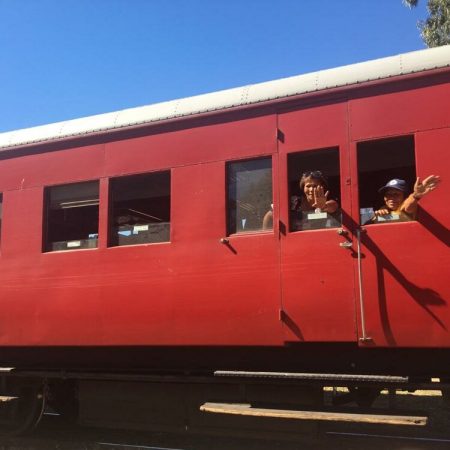
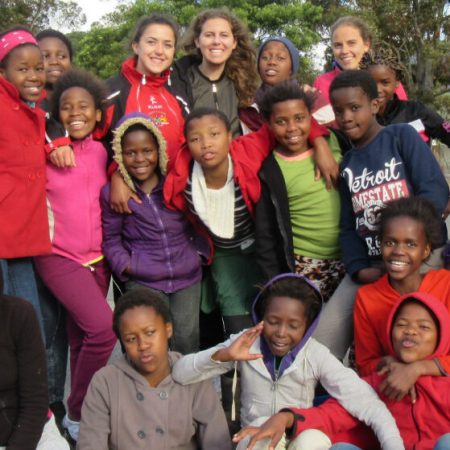
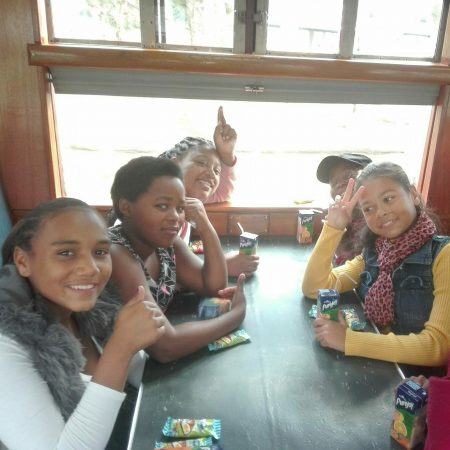
In 1890 the first steam train stopped at the station. In 1925, the waiting room was used for English church services. During the early 1900s, the villagers’ major source of income was the picking of the wildflowers, growing profusion on the mountains and hills around the village. were then sold to travellers. The Ceres Rail Company’s Steam Train stopped at the station Easter Weekend 2019, it was the first time in more than 20 years, and 40 kids from the community had the opportunity to travel over the Sir Lowry’s Pass to Elgen Steam Train Market for lunch.
In the early 2000’s a large number of Xhosa people moved from the Eastern Cape into the new established RDP houses in the Village. The lack of job opportunities in the surrounding area, has created a crisis situation for them and other Villagers, and the socio-economic situation has threatened the survival of their communities and their cultures.
Sir Lowry’s Pass Village (SLPV) comprises of around 13,000 residents who are predominantly of indigenous KhoiSan, Coloured or African descent. The village is surrounded by an extremely affluent community bordering it on all sides. Poverty, illiteracy, substance abuse and a general sense of despair are rampant and most of the residents are currently unemployed.
The Tourism project aims to address this situation by creating jobs through SMME development, Youth Empowerment and Cultural history. Besides the historical and cultural wealth of the area, the beautiful vistas of the Hottentots Holland Mountain and False Bay, and the rare mountain fynbos and bird species, make this an ideal area for a unique Eco-Tourism experience.
The villagers, people living on the surrounding farms, and various internal and external stakeholders of Sir Lowry's Pass Village firmly believe in the potential of this community to become a thriving, world-class tourist destination where all people live in harmony and unity. Sir Lowry’s Pass Creative Development NPC (SLPCD) believes that this village and its heritage need to be showcased worldwide.



Our calling & how it all started
On 24 April 2000, a group of concerned Residents from the Sir Lowry’s Pass area, from the Historic Bo-Pas (Victorian Village and Railway Station), Sun City (RDP Housing), the Mission Ground (Historic Wesleyan Settlement where the Rev. Barnabas Shaw settled the Freed Slaves), the informal settlements (Uitkyk, Pinetown, Tasbakstraat, Philander’s Cottages, Tokoloshe Camp, Riverside and Rastakamp), the Smallholdings and Farms, and sundry other properties in the Sir Lowry’s Pass area, got together to see what could be done about saving their Village from decay and restoring it for posterity – and more importantly – to find an economical solution for the benefit of the people currently living there.
And so, the Sir Lowry’s Pass Tourism Initiative (SLPTI) came into being and became formally constituted on 29 January 2001. The SLPTI has subsequently faded away due to lack of a champion, but not before the Sir Lowrys Pass Tourism & Business Development Trust (SLPT&BDT) was formed.
The values and vision of the SLPTI are still firmly entrenched in the operations of Sir Lowry’s Pass Creative Development NPC (SLPCD). We have picked up the strings and will continue with the dreams of the community and shareholders.
Read more about what we dream of achieving in the community.